bonus material

Calligraphy

Calligraphy is wonderful in its own right, but its parallels with modern technology are interesting.


Unlike pure art, calligraphy serves a function (in this case, data storage and retrieval). Yet unlike raw data handling, calligraphy serves its function through beauty. Function and beauty combine to create value—the same can be said of a successful interface. Mediums have changed over millennia, but that fact has persisted.


Calligraphy was the ancient form of writing code: relatively few could read it, and precious few could write it well. For several millennia, "compression algorithms" exerted selective pressure that created new forms. Styles became popular if they increased writing speed and/or decreased page-space usage. Later in the 19th century, with efficient methods of communication secured, visual beauty exerted greater selective pressure. When humanity feels truly secure with its new data storage methods (mass processing, warehouse energy efficiency, cataloguing, etc.) will we see a similar pattern emerge? I think that is possible.


I am not a professional calligrapher—these pieces are full of errors. But I love putting ink on a page, and I hope that this inspires you to pursue your own joys for their own sake. In the vast tech landscape we inhabit, just for a minute, enjoy looking at something different.

Calligraphy is wonderful in its own right, but its parallels with modern technology are interesting.


Unlike pure art, calligraphy serves a function (in this case, data storage and retrieval). Yet unlike raw data handling, calligraphy serves its function through beauty. Function and beauty combine to create value—the same can be said of a successful interface. Mediums have changed over millennia, but that fact has persisted.


Calligraphy was the ancient form of writing code: relatively few could read it, and precious few could write it well. For several millennia, "compression algorithms" exerted selective pressure that created new forms. Styles became popular if they increased writing speed and/or decreased page-space usage. Later in the 19th century, with efficient methods of communication secured, visual beauty exerted greater selective pressure. When humanity feels truly secure with its new data storage methods (mass processing, warehouse energy efficiency, cataloguing, etc.) will we see a similar pattern emerge? I think that is possible.


I am not a professional calligrapher—these pieces are full of errors. But I love putting ink on a page, and I hope that this inspires you to pursue your own joys for their own sake. In the vast tech landscape we inhabit, just for a minute, enjoy looking at something different.

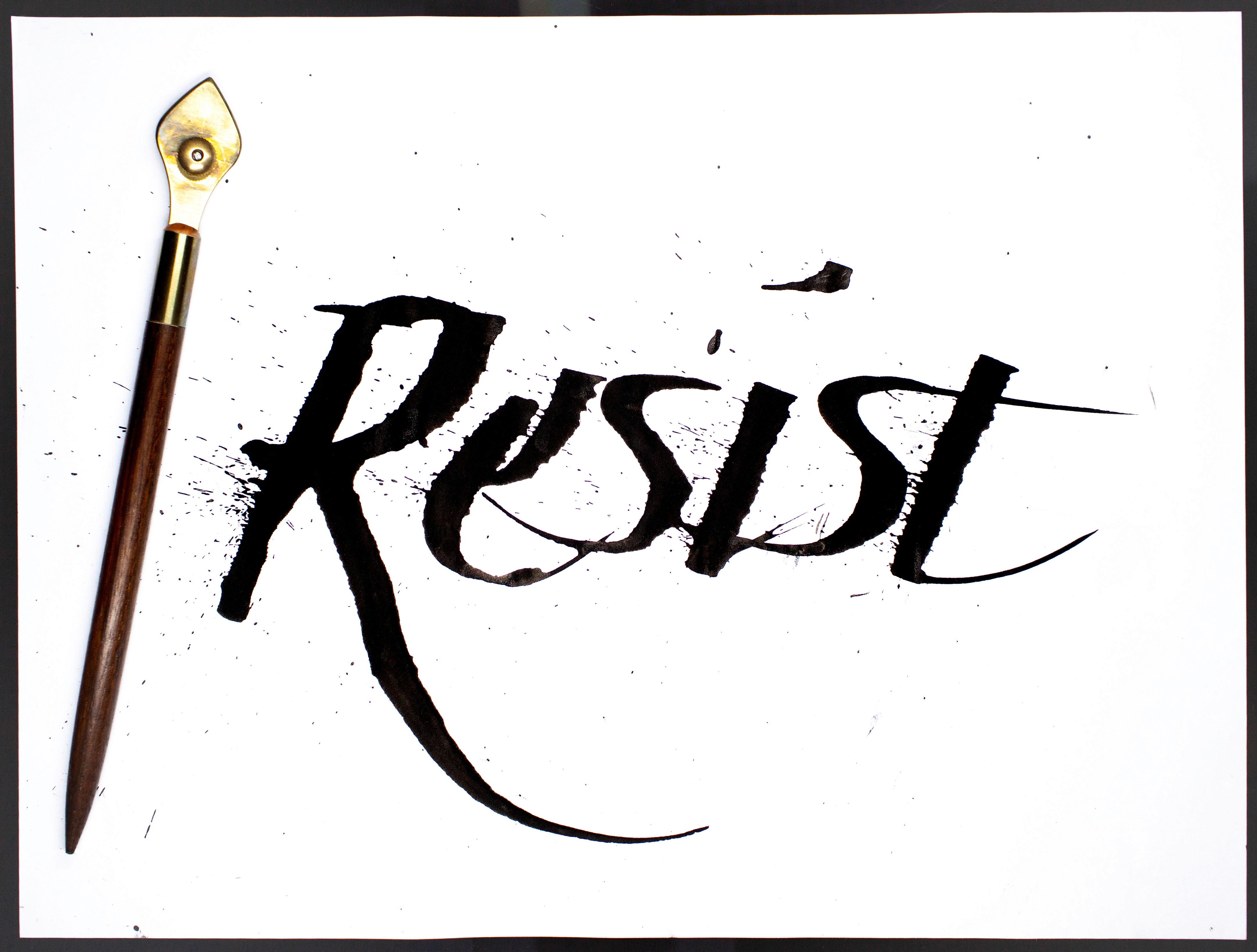
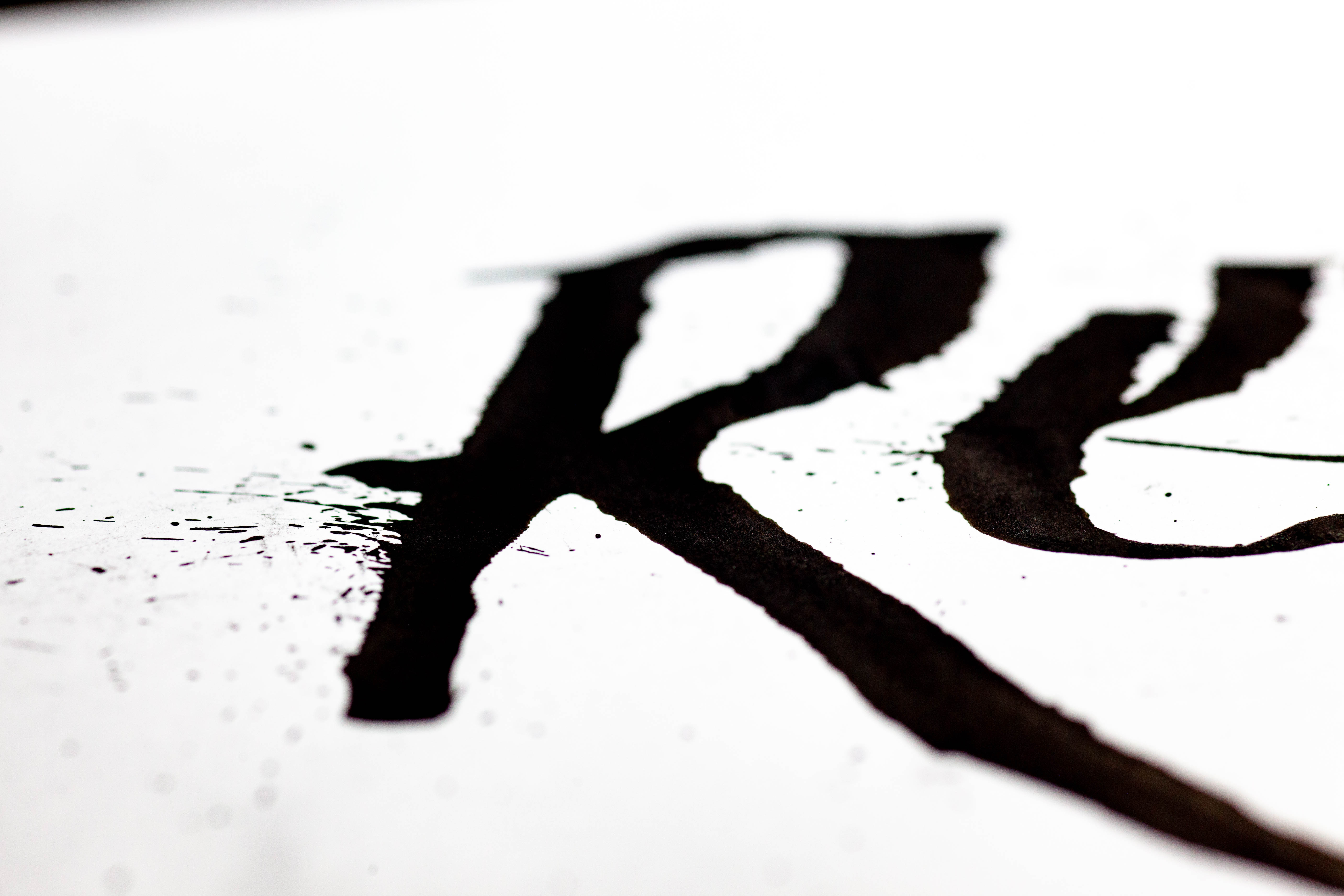
Ruling Pen Experiment

I created this original piece with a ruling pen, which was a tool designed for architects to create blueprints. At some point, calligraphers discovered the tool and started scraping it sideways, splattering ink, and basically being a bunch of chimpanzees with it. We can all be glad they did.
Italic Inspiration

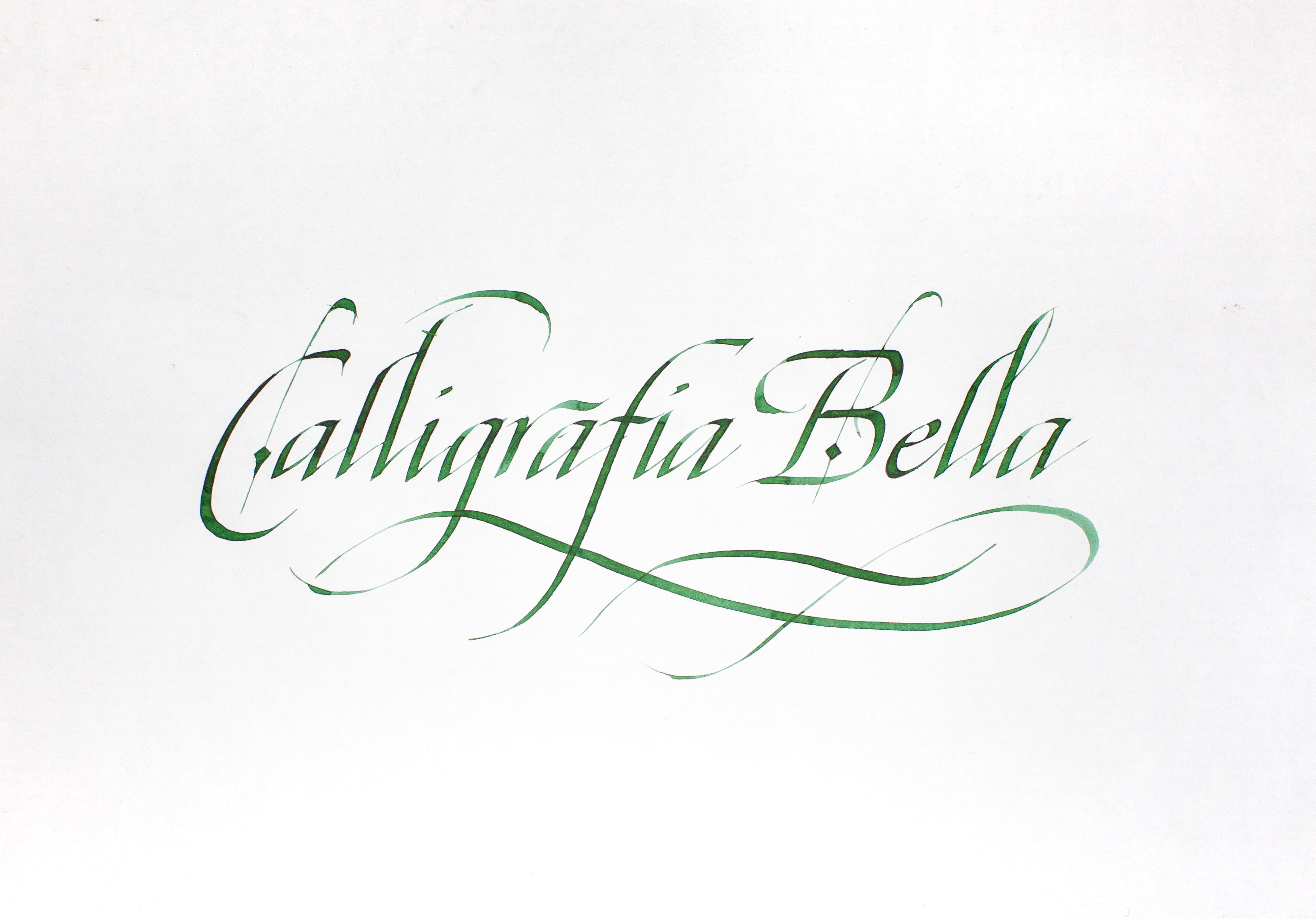
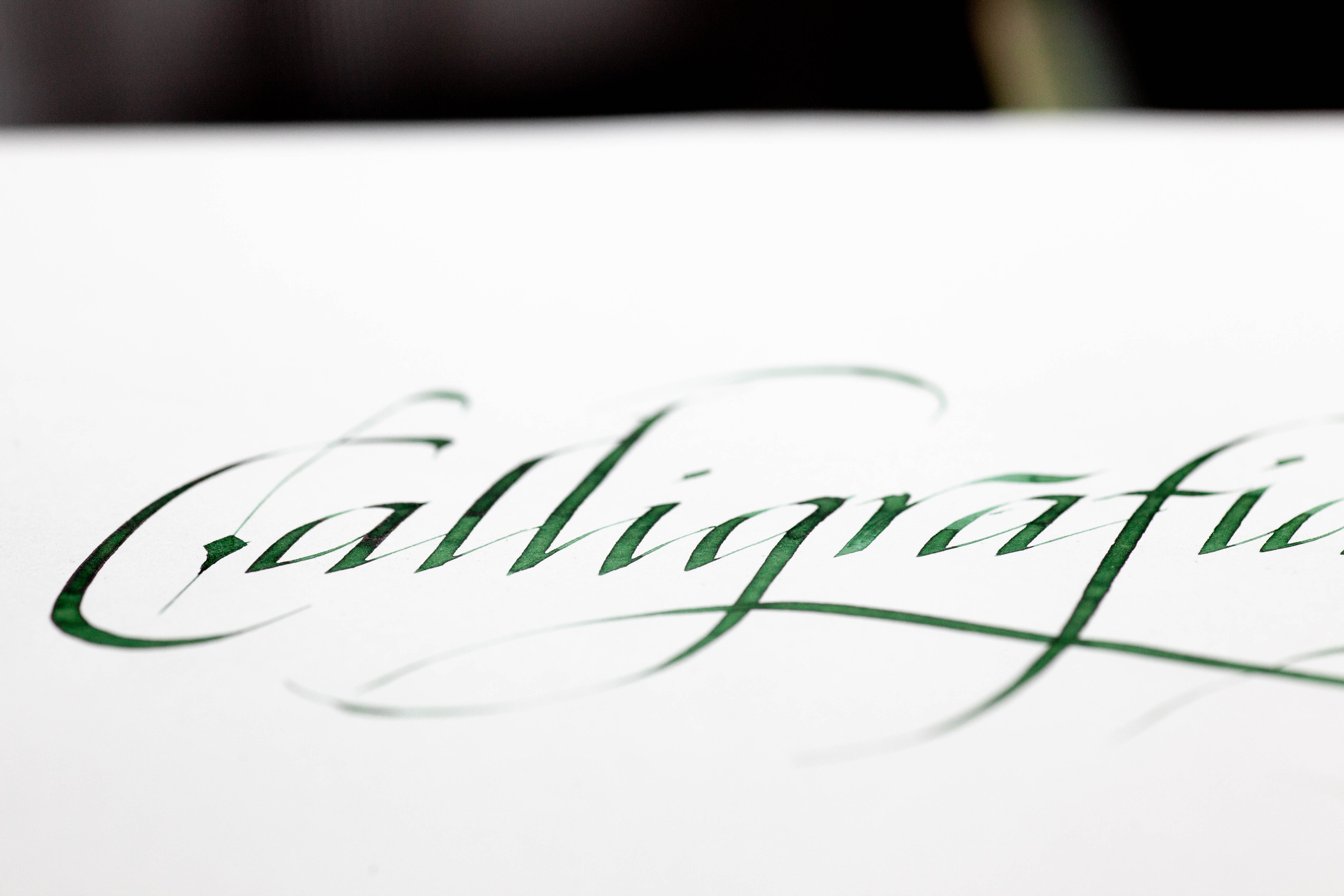
This is an example of Italic, which was created in order to increase writing speed. I was inspired by a piece created by the talented calligrapher José Joaquín Domínguez. I made the following modifications from his original: added a double-L in the word "Calligrafía" (doulbe-L's are important to practice if you are primarily writing in English), added the word "Bella" using the same style, and extended the flourish horizontally to encompass the space below both words.
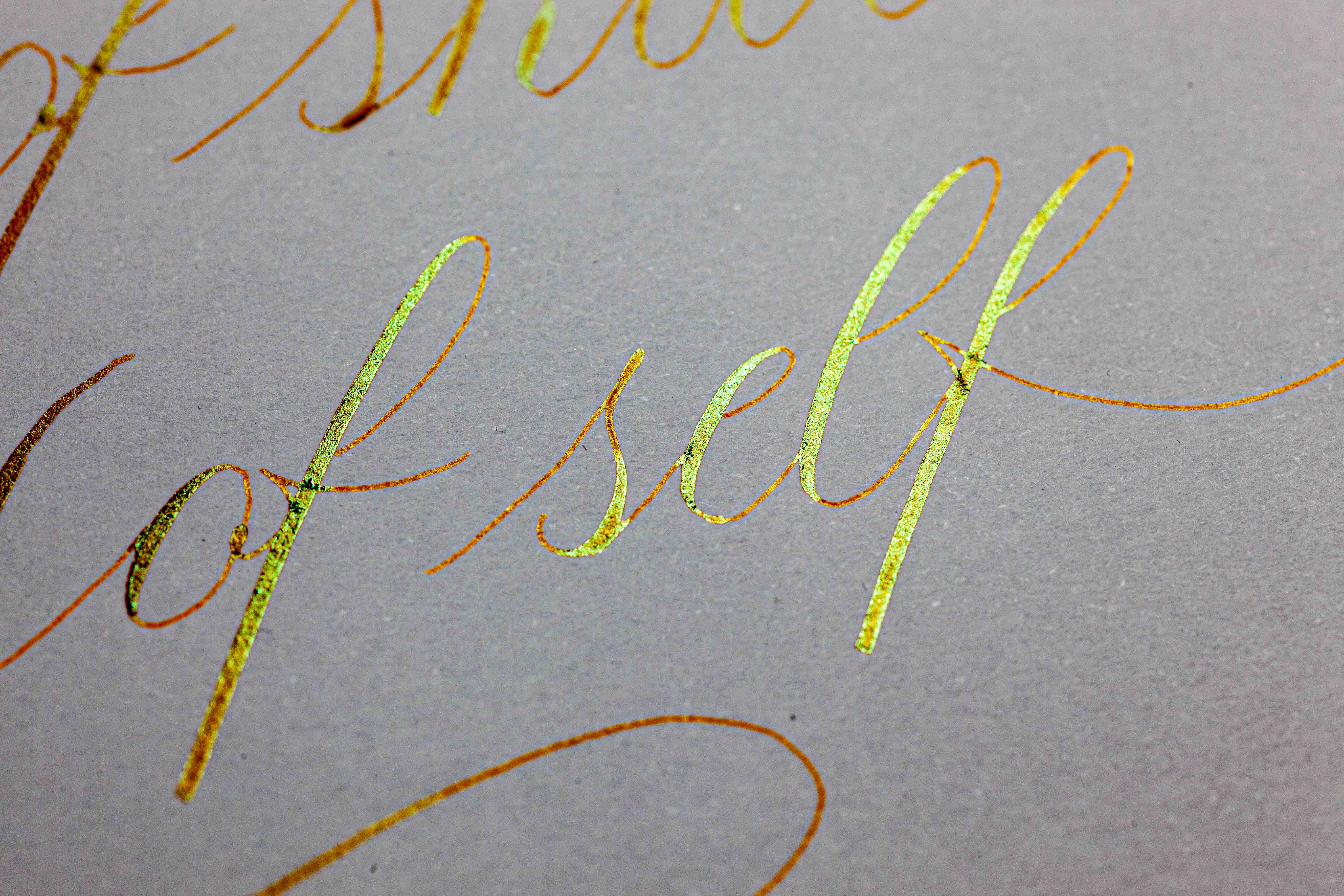
Copperplate Exercise

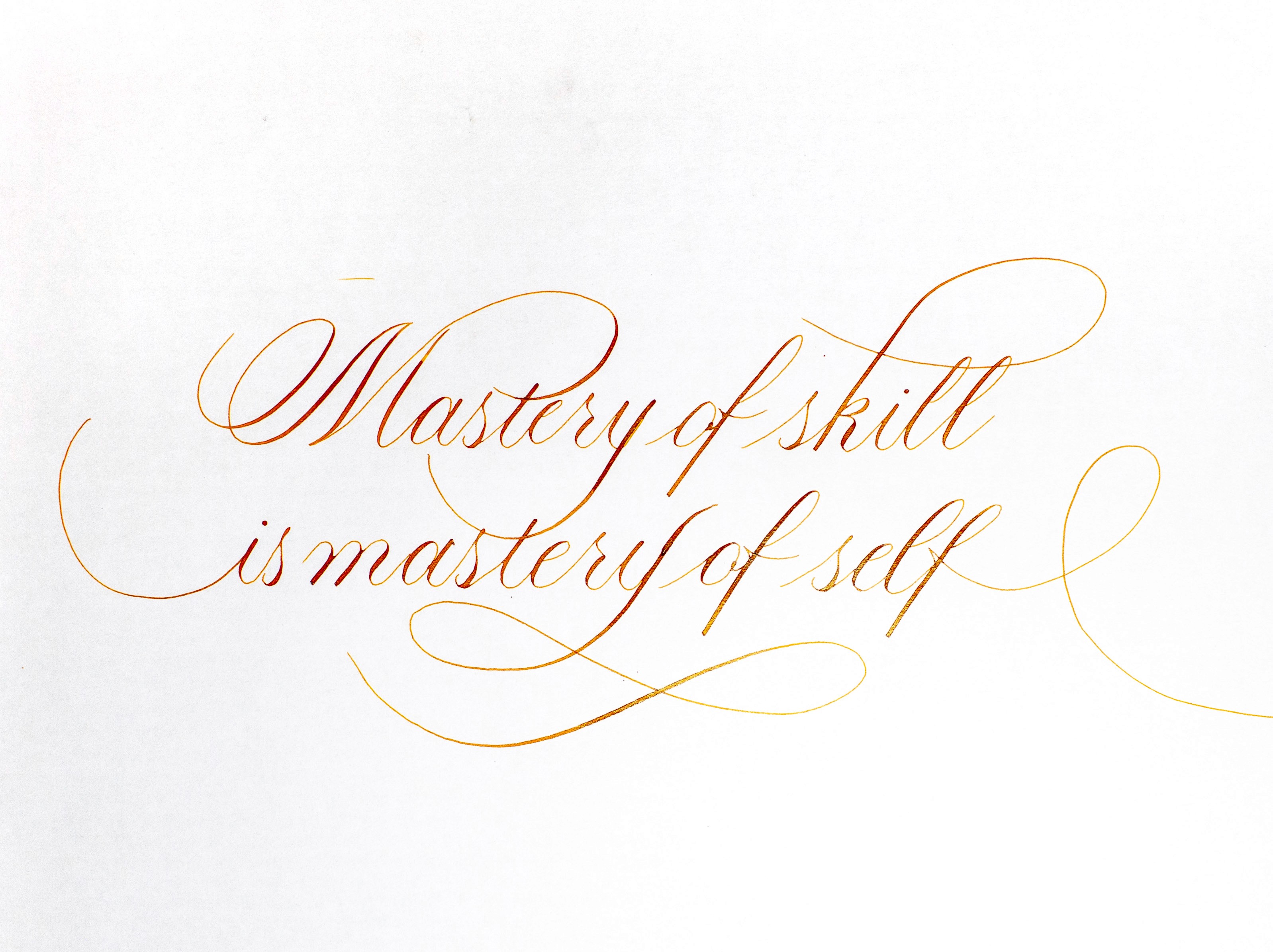
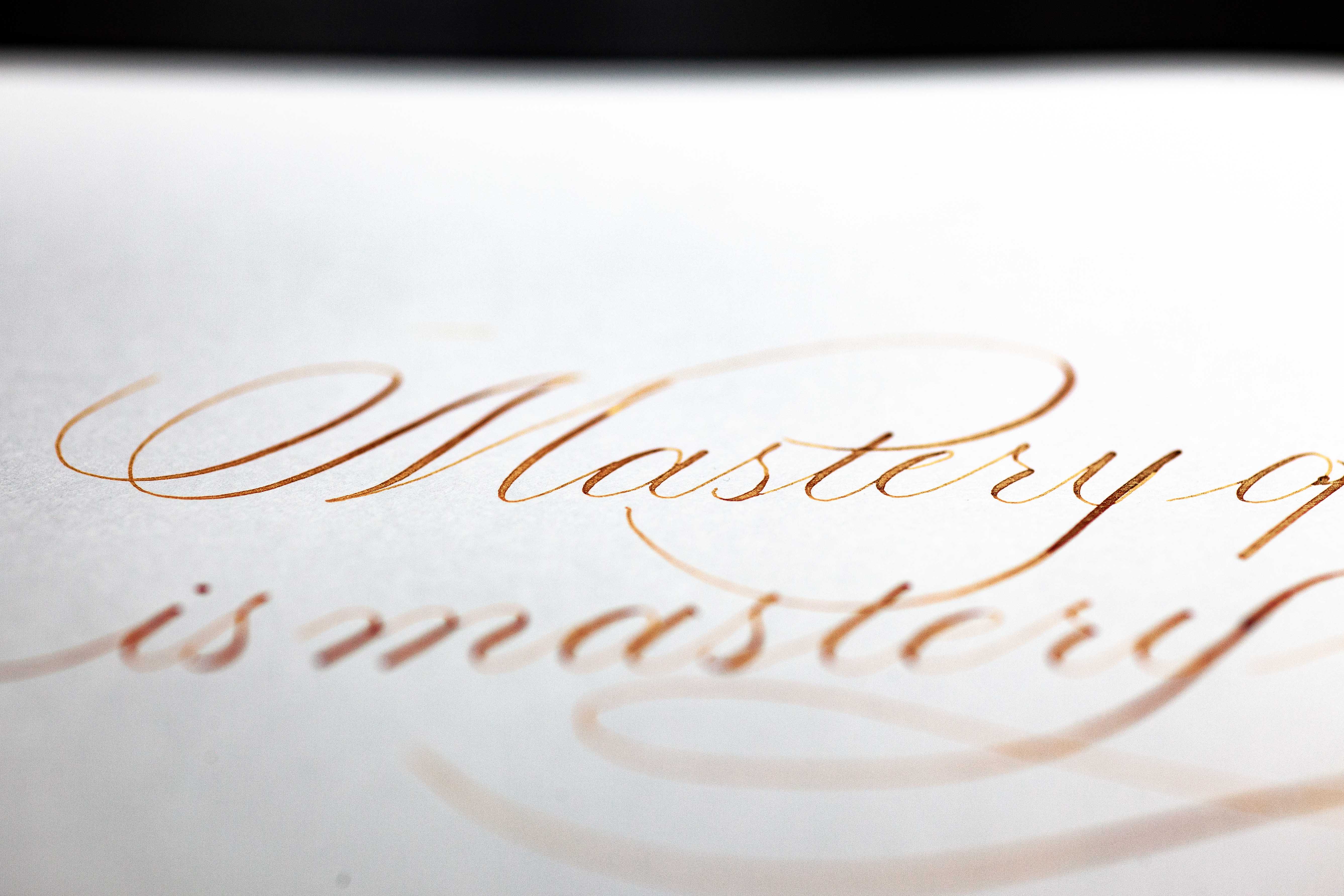
This script is called "Copperplate" (or English Roundhand), which is an example of what emerged after beauty became the selective mechanism for new scripts. I created this original piece with a pointed pen and a beautiful ink called "Tiger Lily". The ink is deep orange on the page, but when the light hits just right, it shimmers metallic green. The quote is an abridged version of a maxim whose source I do not know.
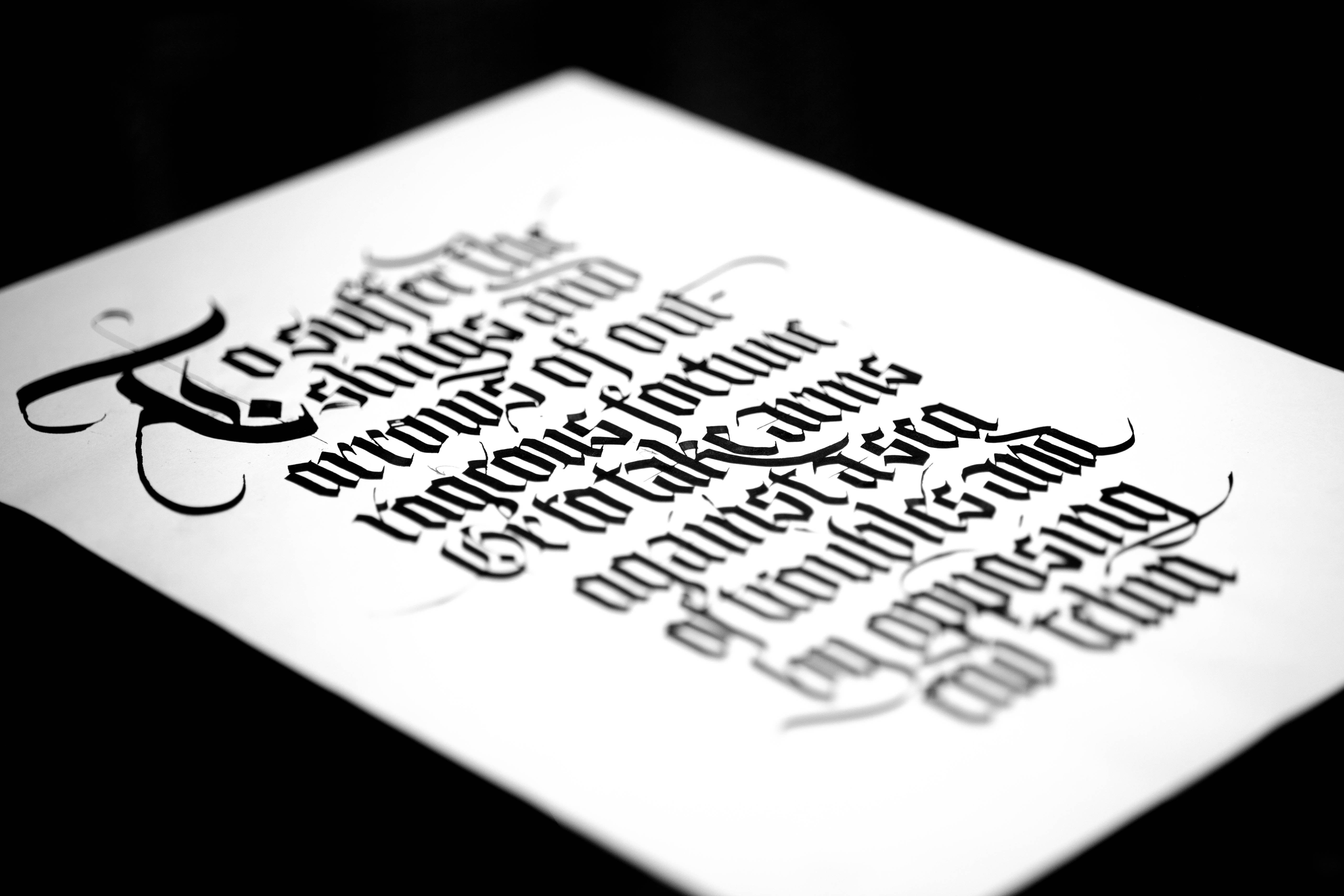
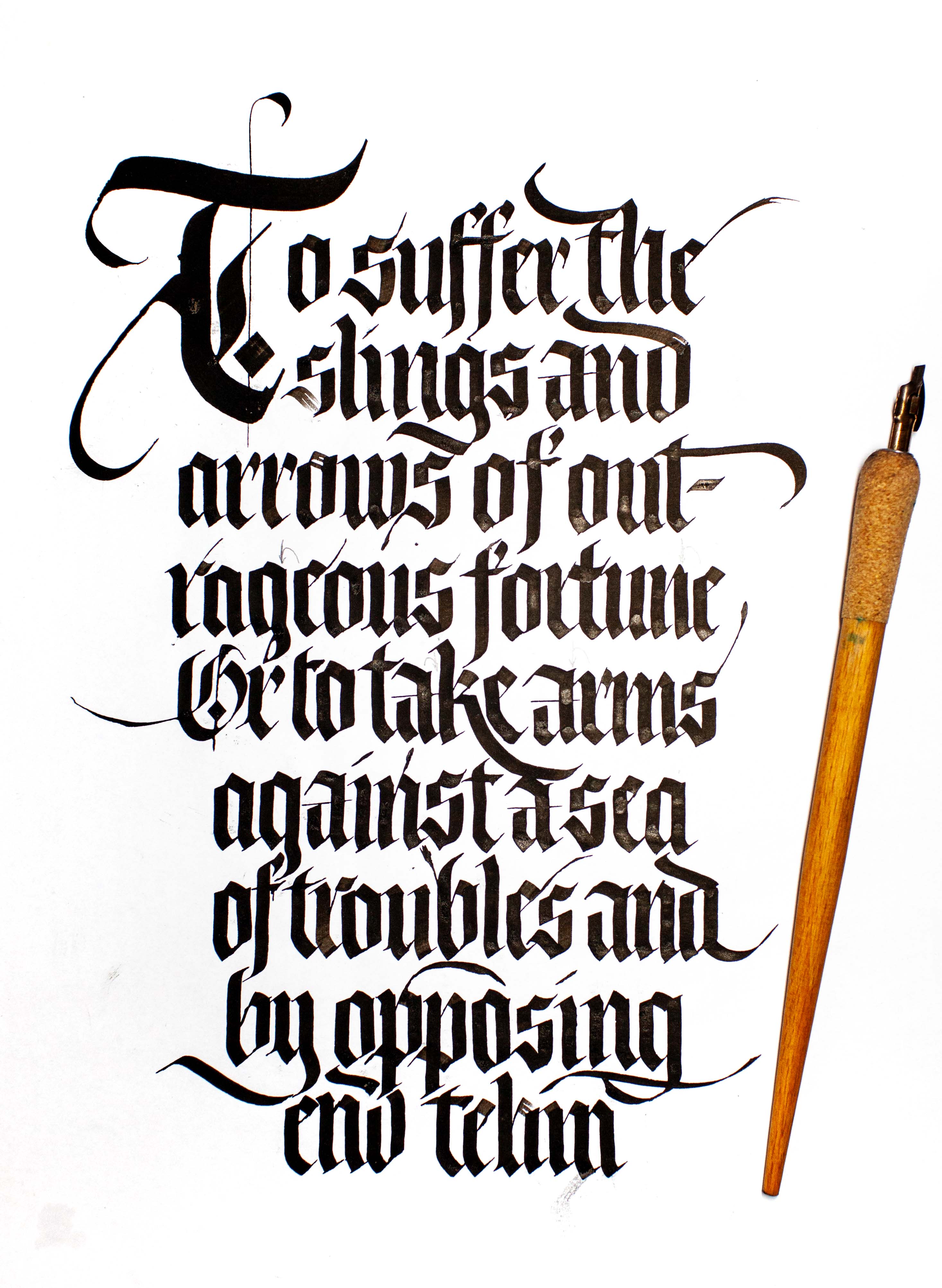
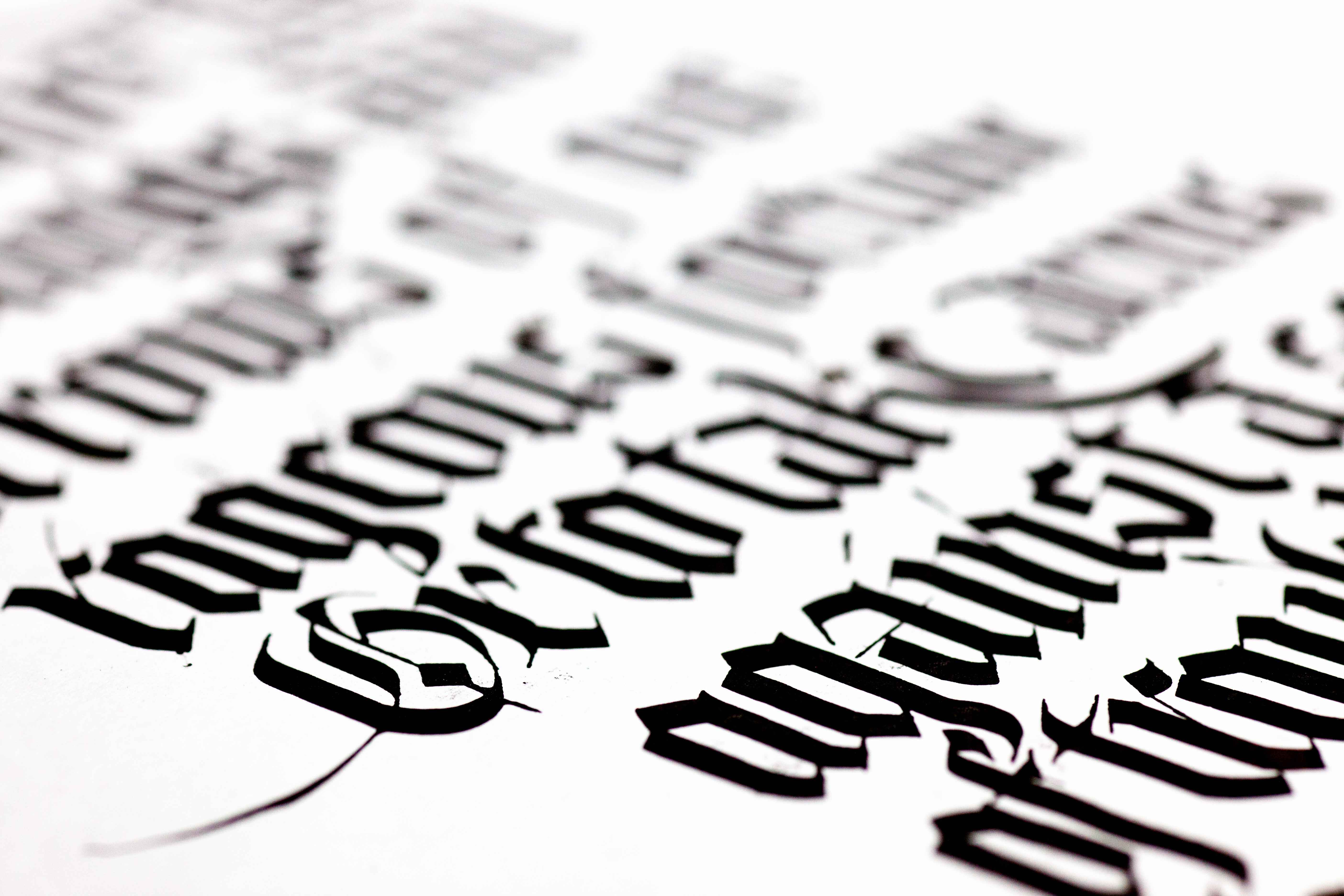
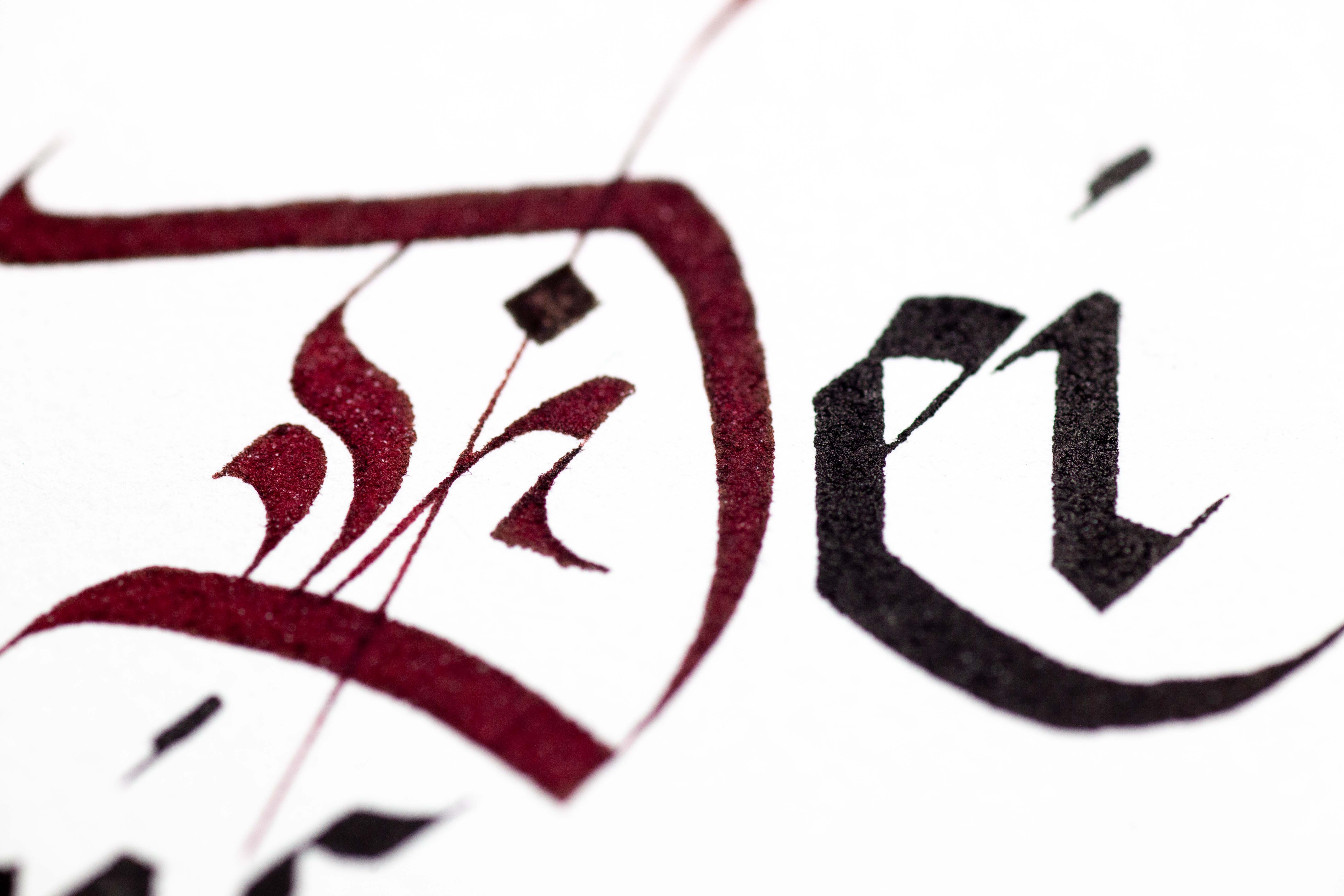
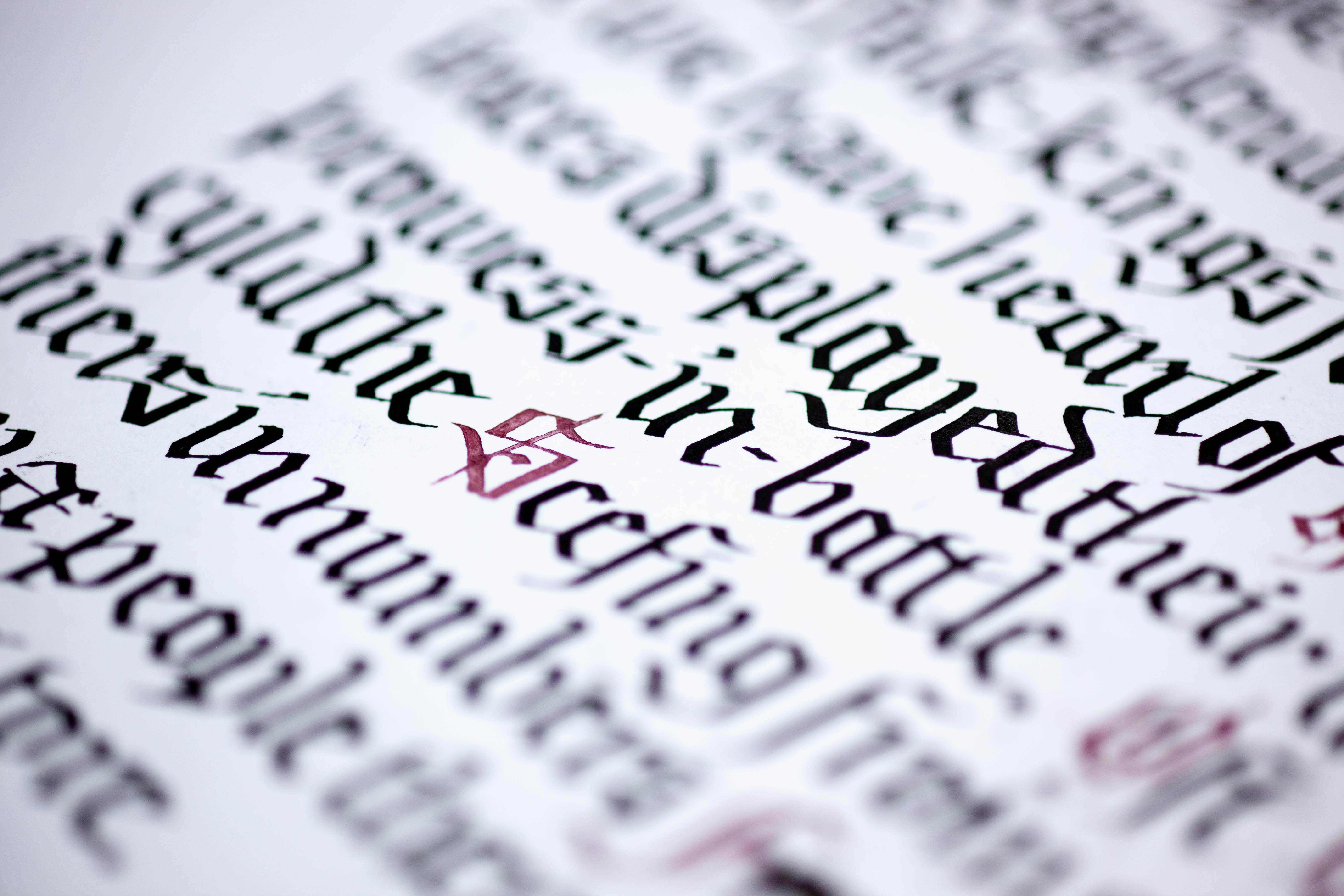
Black Letter: Textura

Script: I created this original piece in "Textura" which is part of the "Black Letter" family. It was developed to save space on the page, affording small spaces within each letter and in between each word. Quote: Shakespeare is an unending source of quotes for a calligrapher. This excerpt is of course from one of Prince Hamlet's soliloquies, and I just had to throw in a typo at the very end. If you look closely you can also see my corrective pencil marks in certain areas.
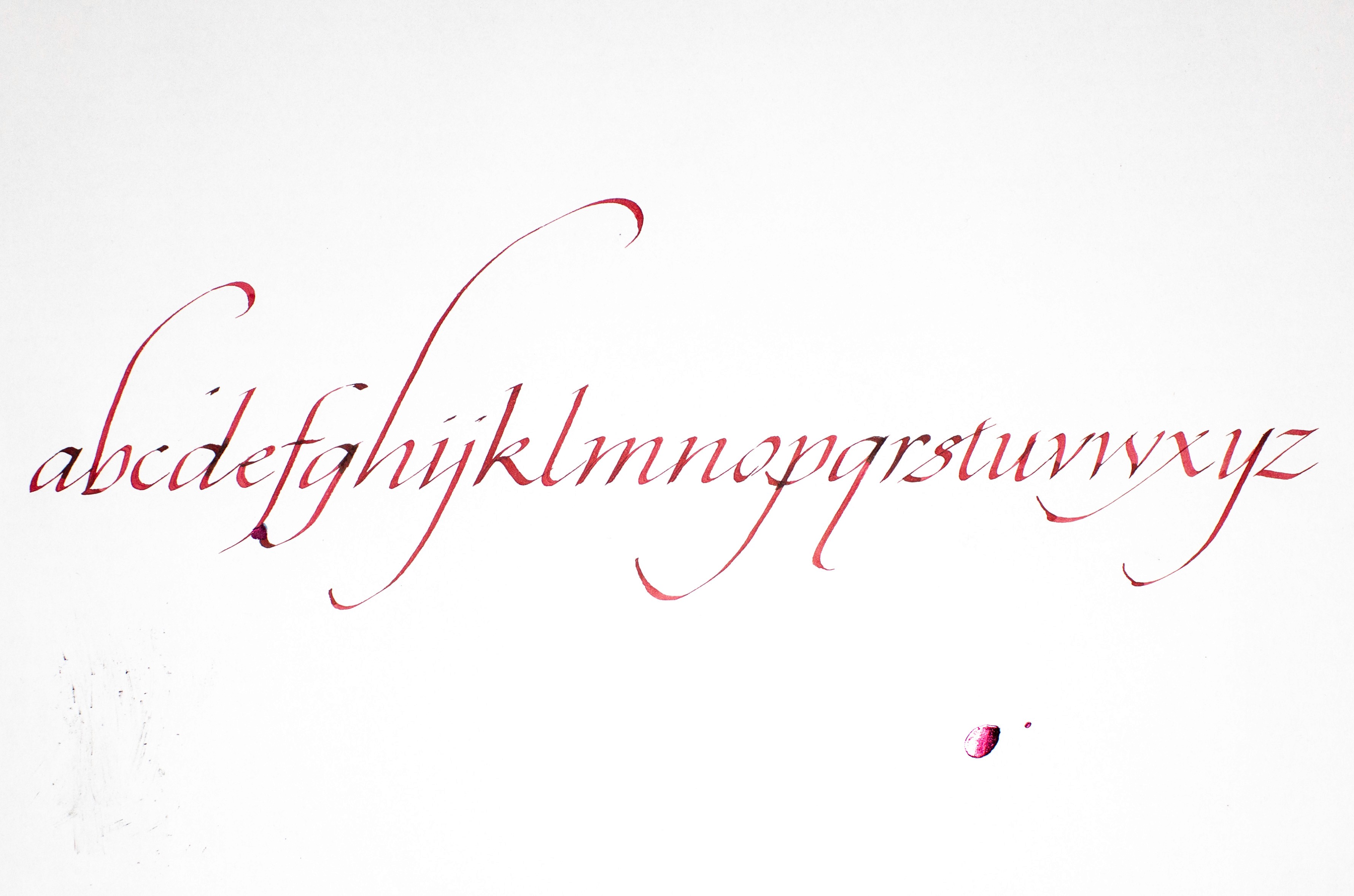
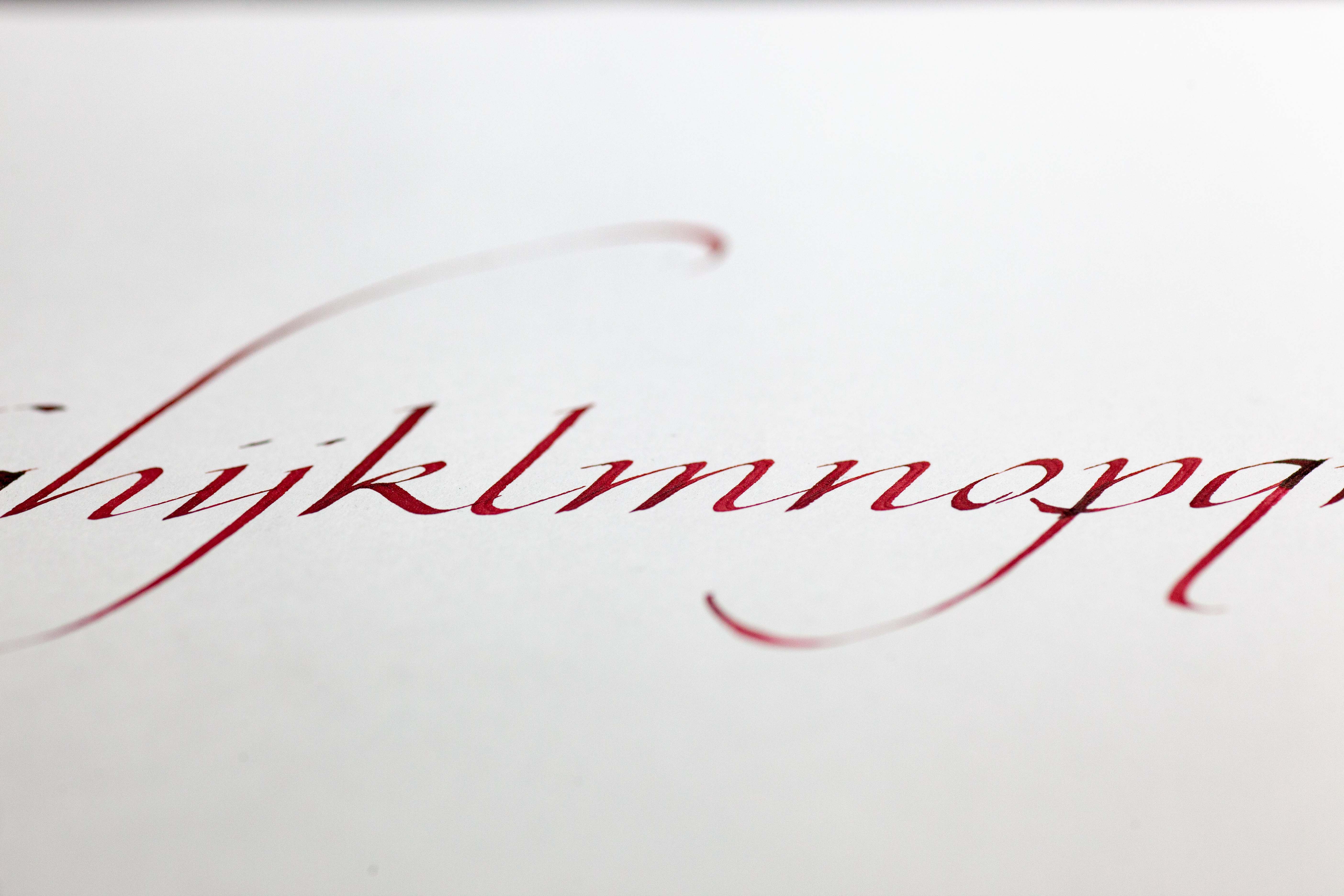
Italic Alphabet + Ink Stains

Writing out the alphabet is crucial for learning any script in calligraphy. It helps you master each letter, along with spacing, flourishing, etc. This was intended as an exercise rather than a display piece, so it is complete with ink stains and smudges.
Copying Luca Barcelona

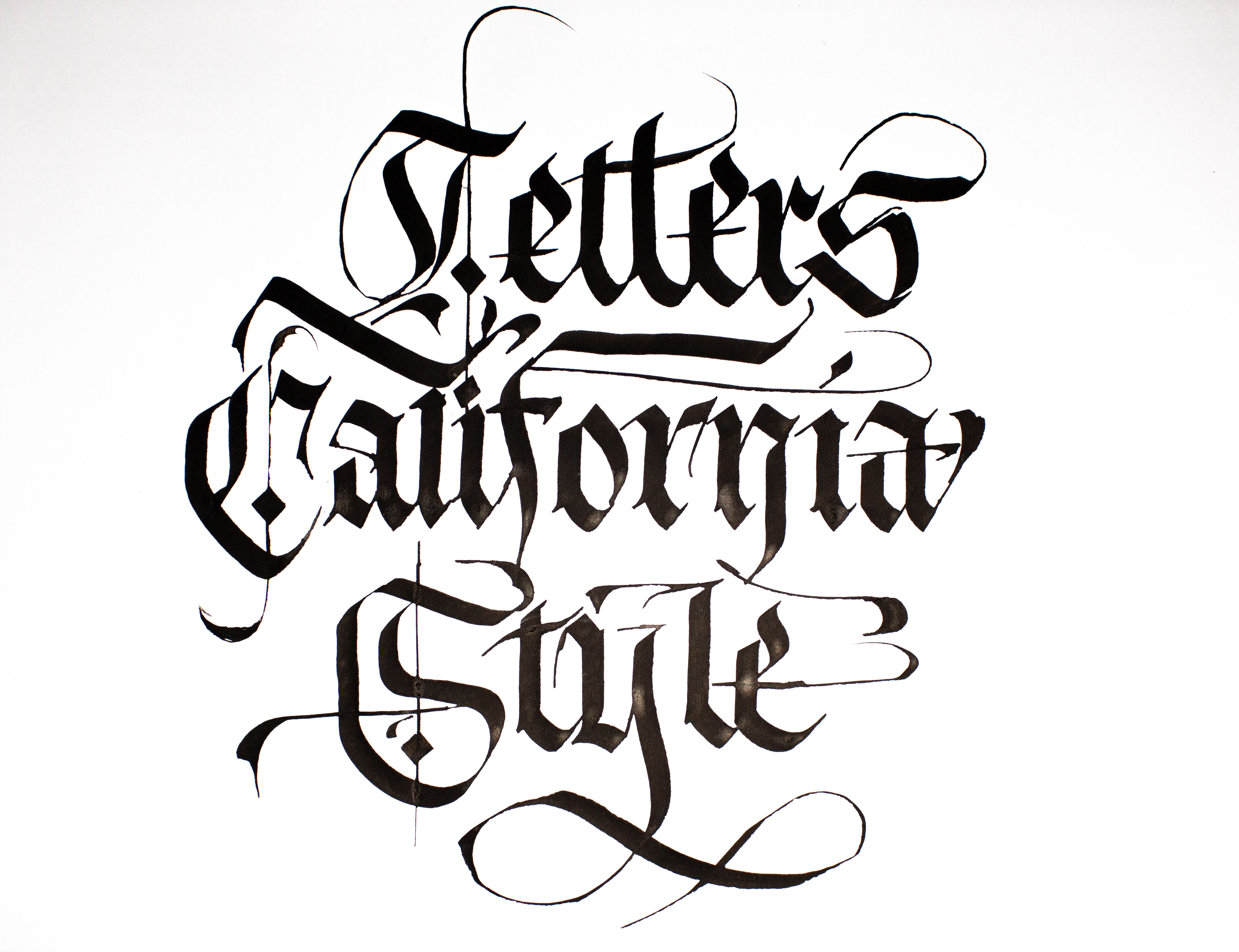
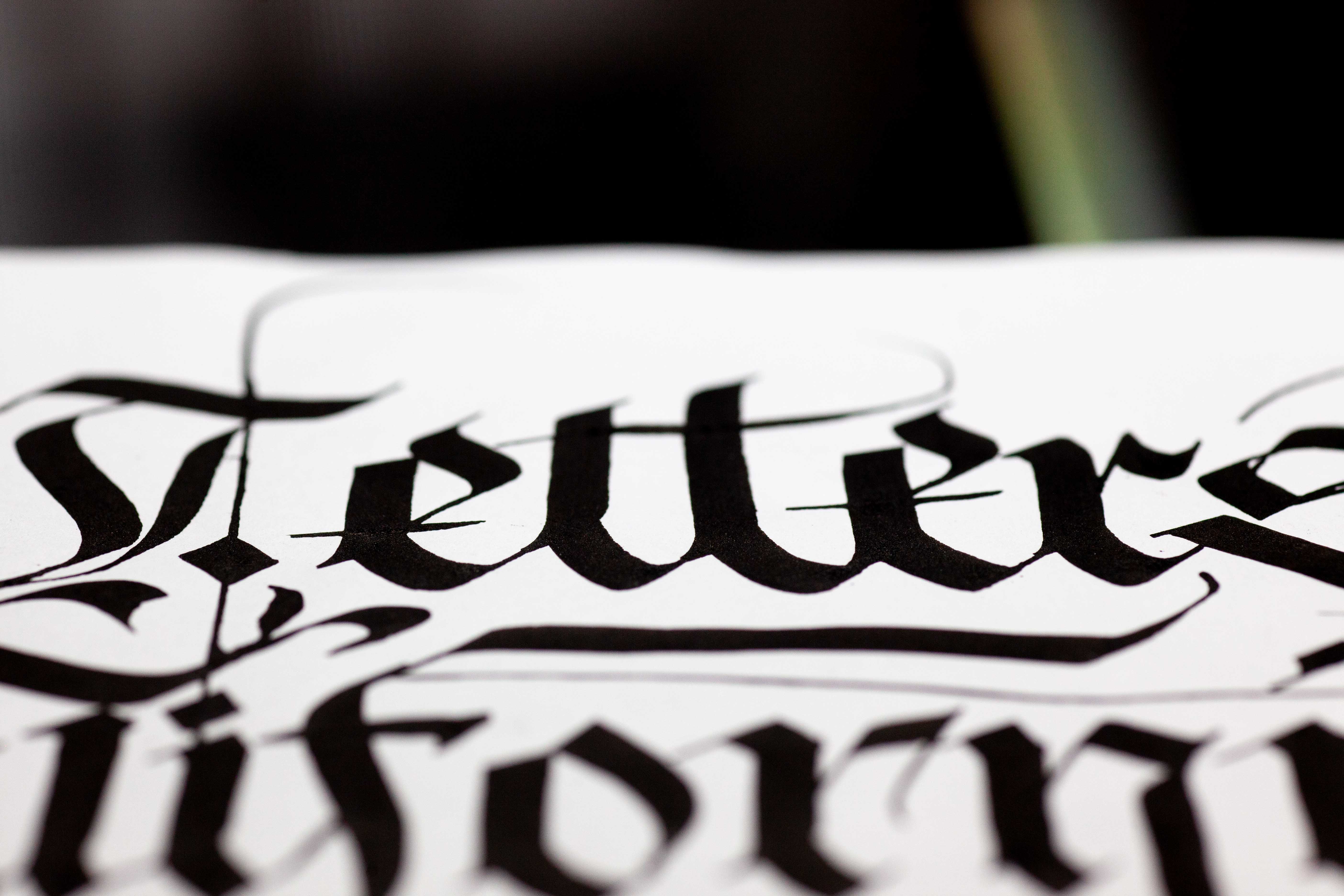
One of my favorite calligraphers is the absolute grandmaster Luca Barcelona. He started as a graffiti artist on the streets of Italy, but became so skilled that he now creates pieces for major brands around the world. I saw this composition on a photo of a surf board, and decided to copy it as an exercise in advanced lettering.
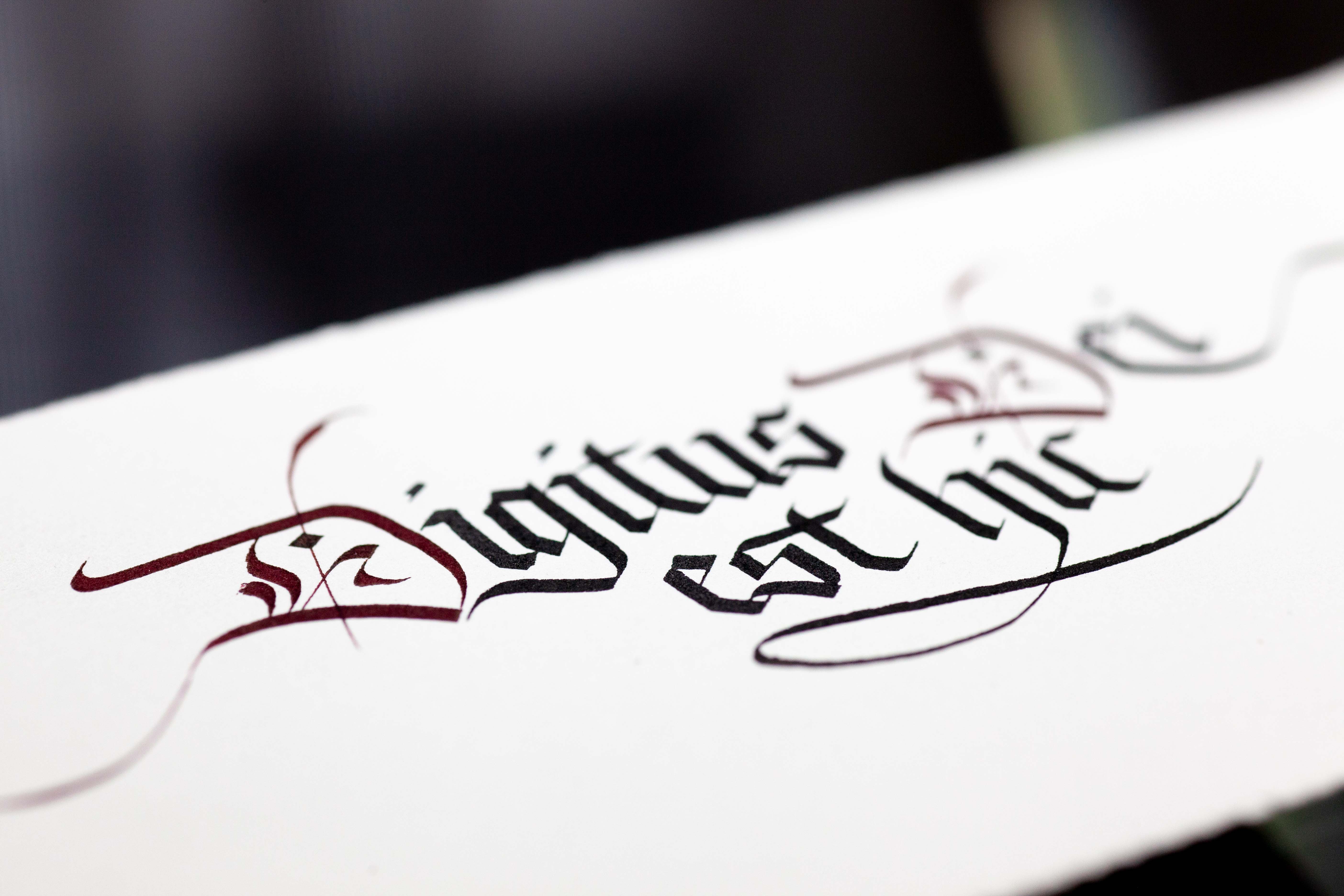
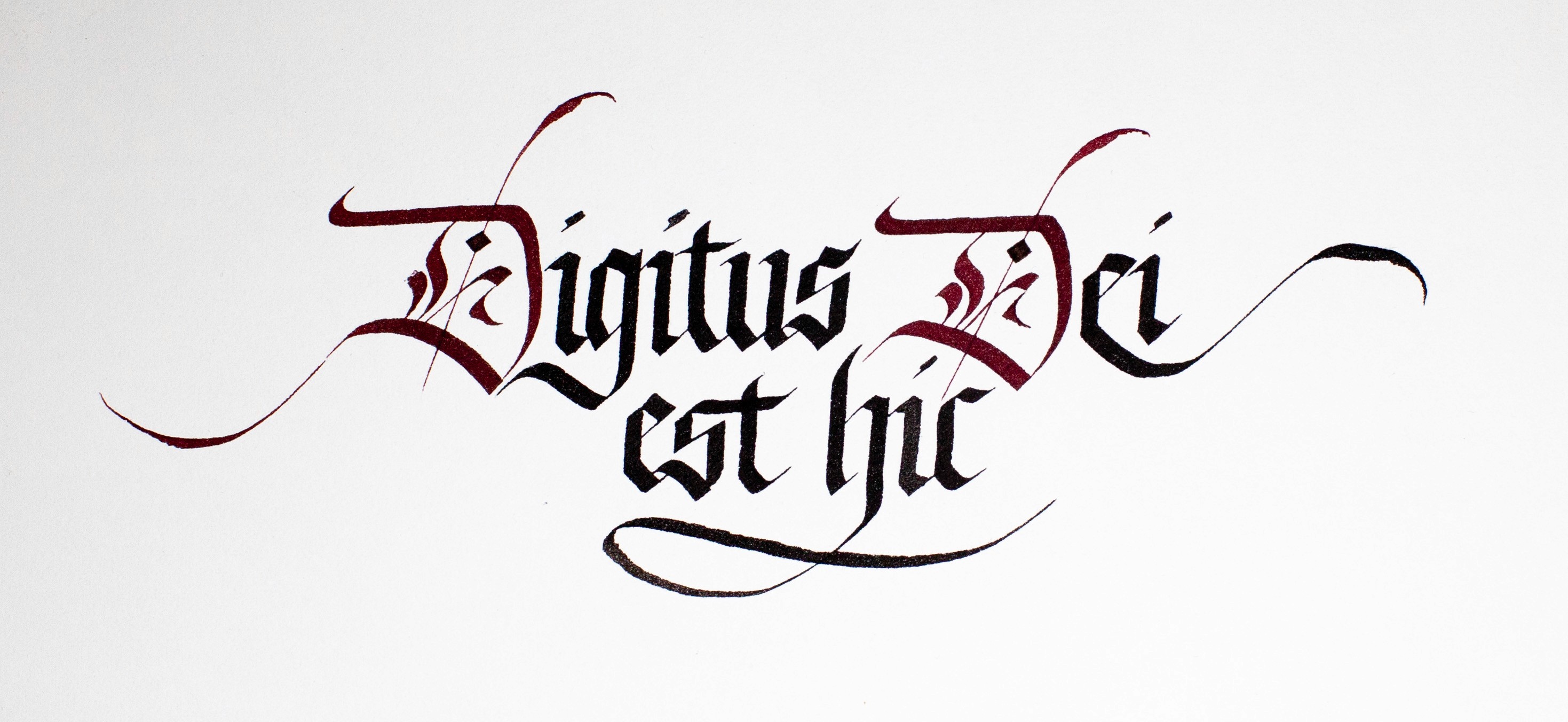
"Digitus Dei est hic" — "The Finger of God is here."

I created this original composition on request. It is a quote from the book "He Leadeth Me", reminding us to have hope even in the darkest places.